Pressure regulation
Electronic pressure-control requests where setpoint, inlet pressure, regulated range, accuracy, and response affect performance.
Home / Products / Proportional valves
Pneumatic and fluid control
A useful proportional-control request starts with the medium, pressure range, flow requirement, port, voltage, control signal, response objective, and installation constraints. Cutronex uses those inputs to organize a sourcing discussion.
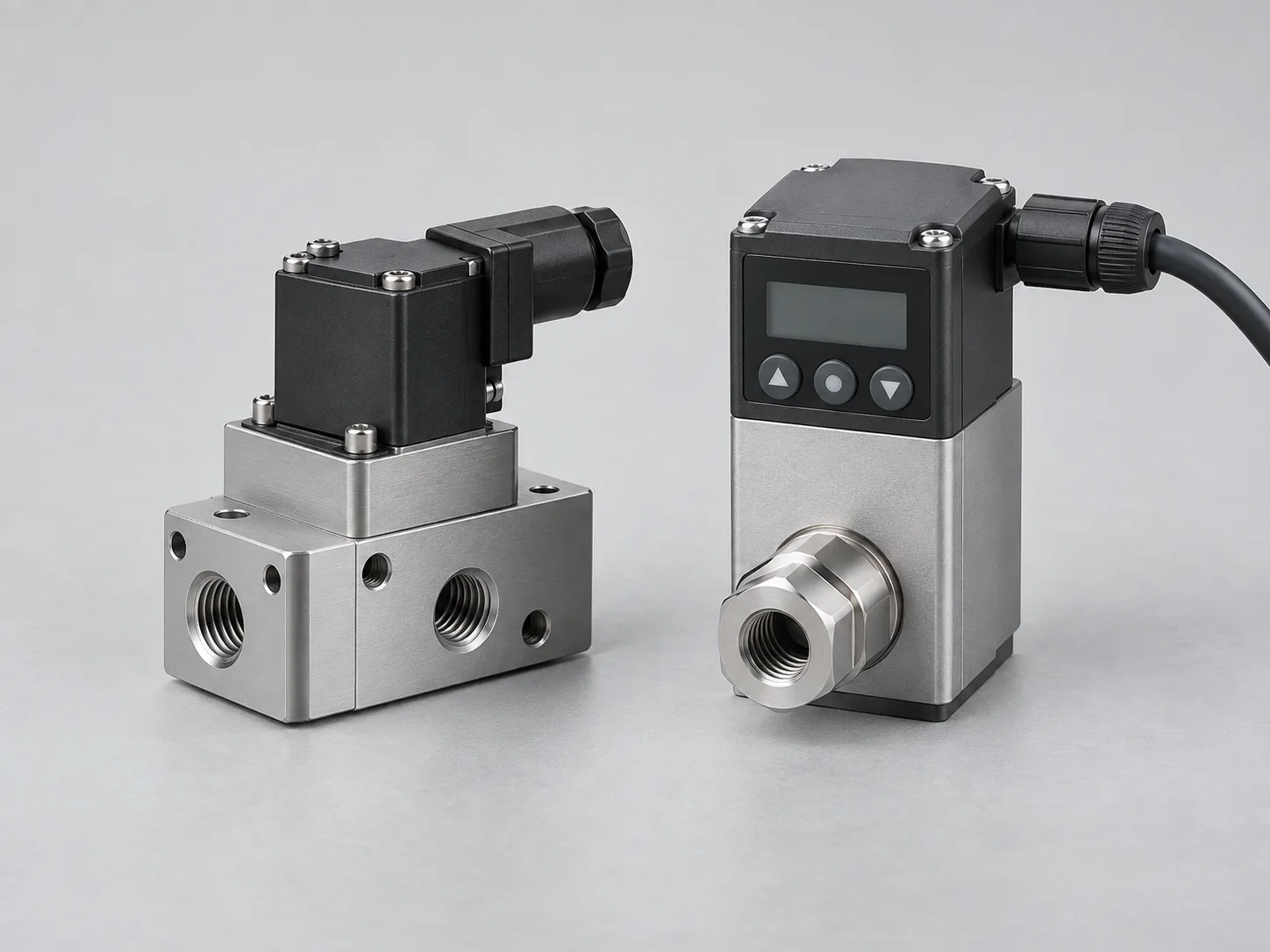
Technical performance, materials, approvals, and availability must be verified for the selected model.
Core request types
Electronic pressure-control requests where setpoint, inlet pressure, regulated range, accuracy, and response affect performance.
Flow-control requests that depend on medium, pressure differential, required flow, orifice, dynamic range, and signal.
Requests starting from an installed valve or controller. Mechanical and control-system compatibility must be checked together.
RFQ inputs
| Parameter group | Examples to provide | What can go wrong if omitted |
|---|---|---|
| Fluid and environment | Air, gas, water or other medium; temperature; cleanliness; ambient conditions | Seal, corrosion, contamination, and safety mismatch |
| Pressure and flow | Supply pressure, regulated range, pressure differential, nominal and peak flow | Undersizing, poor response, instability, or excessive pressure drop |
| Control | 0–10 V, 4–20 mA, PWM, fieldbus, feedback, fail position | Controller and PLC incompatibility |
| Mechanical | Port thread, manifold, envelope, mounting, connector, tube size | Installation rework or impossible fit |
| Commercial | Quantity, destination, sample need, documentation, lead-time target | A technically suitable option may not be commercially viable |
What this page does
Until supplier data, test evidence, and a verified product matrix are available, Cutronex will not publish invented pressure ranges, accuracy values, certifications, or guaranteed equivalents. The site collects the facts needed to choose a real product responsibly.
Send the specification you know. Missing pressure, flow, signal, and installation details can be clarified next.